PGI Agriculture Students Gain Hands-On Poultry Farming Training
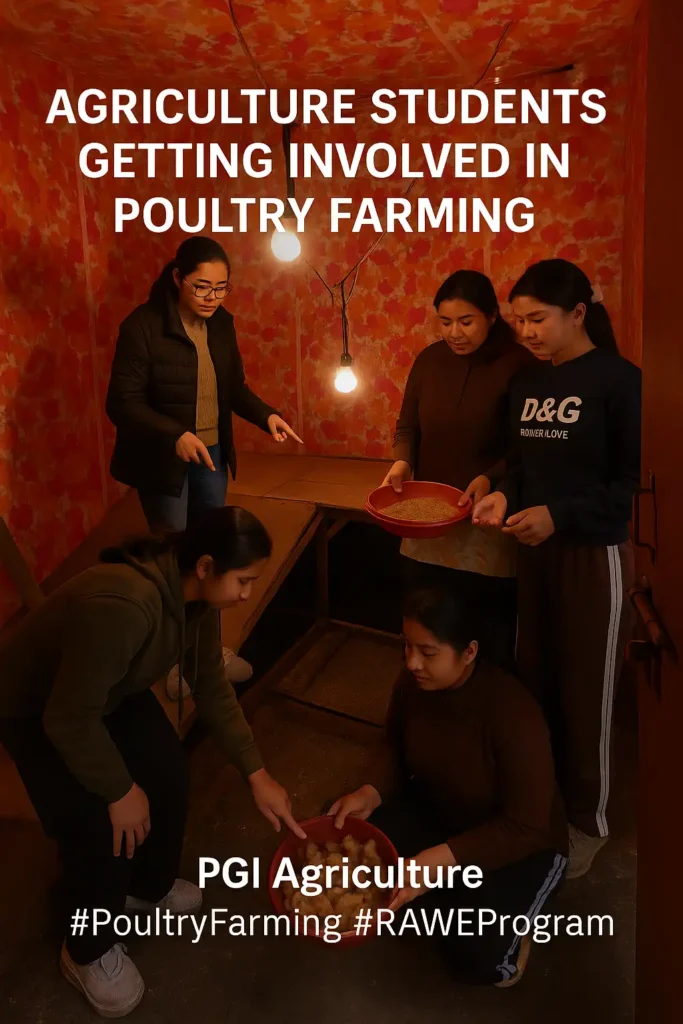
Practical learning has always been at the heart of agricultural education, and PGI Agriculture is proving it once again! As part of their RAWE (Rural Agricultural Work Experience) program, 7th semester B.Sc. Agriculture students are gaining hands-on experience in poultry farming, a sector that plays a powerful role in India’s rural economy.
Through this program, students are not just studying poultry production from textbooks—they are actively engaging with real farm operations, understanding challenges, and developing practical skills that the industry truly demands.
What is RAWE and Why Poultry Farming?
The RAWE program is designed to bridge the gap between theoretical agricultural knowledge and real-world farming practices. It allows students to step out of the classroom, interact with farmers, work on live projects, and experience agricultural entrepreneurship first-hand.
Poultry farming is one of India’s fastest-growing agribusiness sectors, making it the perfect arena for students to learn job-ready skills. From broiler production to egg marketing, poultry farming teaches essential management, economic and scientific skills.
What Students Learnt
1. Understanding Poultry Housing and Management
2. Breeding & Brooding Techniques
3. Feeding and Nutrition
4. Poultry Health Care & Disease Prevention
5. Marketing, Costing & Farm Economics
6. Problem-Solving Through Real Challenges
Hands-On Learning: What Students Are Experiencing
1. Understanding Poultry Housing and Management
Students observe how poultry sheds are structured, ventilated, and maintained. They learn:
Temperature and humidity control
Space management
Biosecurity measures
Waste management practices
This knowledge helps them understand how environment affects bird health and productivity.
2. Breeding & Brooding Techniques
Under expert supervision, students practice:
Selection of parent stock
Brooding management for chicks
Maintaining temperature and light schedules
Monitoring chick behaviour
These early-life management skills are crucial because brooding determines the overall performance of the flock.
3. Feeding and Nutrition
A core part of the training involves:
Understanding feed composition
Scheduling feed according to bird age
Managing water quality and intake
Identifying nutritional deficiencies
Students also learn how feed affects growth rate, immunity, and egg production.
4. Poultry Health Care & Disease Prevention
With guidance from mentors, students examine:
Common diseases like Ranikhet, coccidiosis, and fowl pox
Vaccination schedules
Symptoms of infections
Use of probiotics and supplements
This equips them with real diagnostic and farm-health management abilities.
5. Marketing, Costing & Farm Economics
Beyond technical skills, students explore the business side of poultry farming, learning:
Input-output costing
Market demand analysis
Profit calculation
Pricing strategies
This economic exposure helps them think like agripreneurs rather than just students.
6. Problem-Solving Through Real Challenges
Every day in a poultry farm is different—disease outbreaks, feed fluctuations, and market price changes all affect production.
Students learn to:
Observe and analyse issues
Identify practical solutions
Make decisions based on real data
This problem-solving mindset is exactly what the agricultural sector needs today.
Why This Experience Matters
Poultry farming is one of the most profitable segments in agriculture. By being part of this RAWE project, students get:
Industry-ready skills
Upgraded confidence in farm management
Knowledge required to start their own poultry enterprise
Understanding of sustainable and scientific farming practices
Such exposure transforms students into professionals prepared for both jobs and entrepreneurship.
PGI Agriculture: Shaping Future Farmers
This initiative reflects PGI Agriculture’s commitment to experiential learning, skill development, and industry-based training. By integrating field-based programs like RAWE, the institute ensures that students graduate with strong practical abilities and a clear understanding of modern agriculture.
Final Thoughts
The poultry farming experience under the RAWE program is not just a subject requirement—it is a complete transformation of learning into practice. From managing birds to understanding market trends, PGI Agriculture students are preparing themselves to become the next generation of confident, knowledgeable and skilled agricultural professionals.
Kudos to the PGI Agriculture team and the students for this impactful learning journey!
#PGIAgriculture #PoultryFarming #RAWEProgram #AgricultureEducation #HandsOnLearning #FutureFarmers